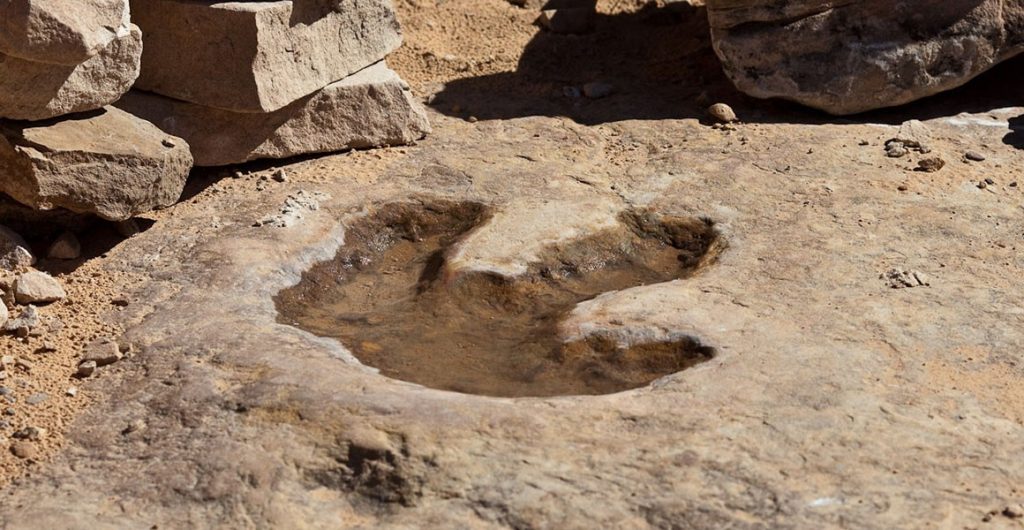
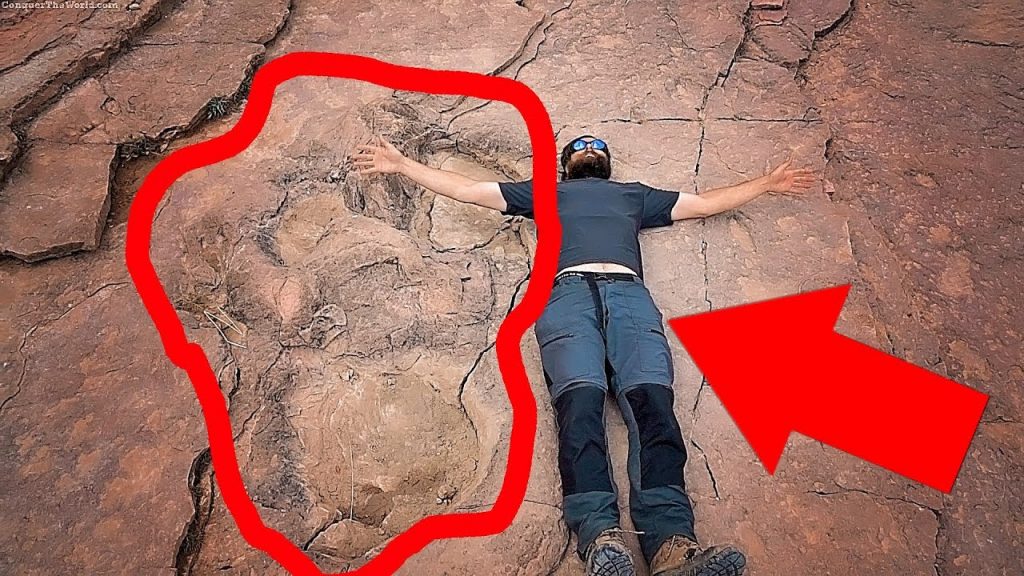
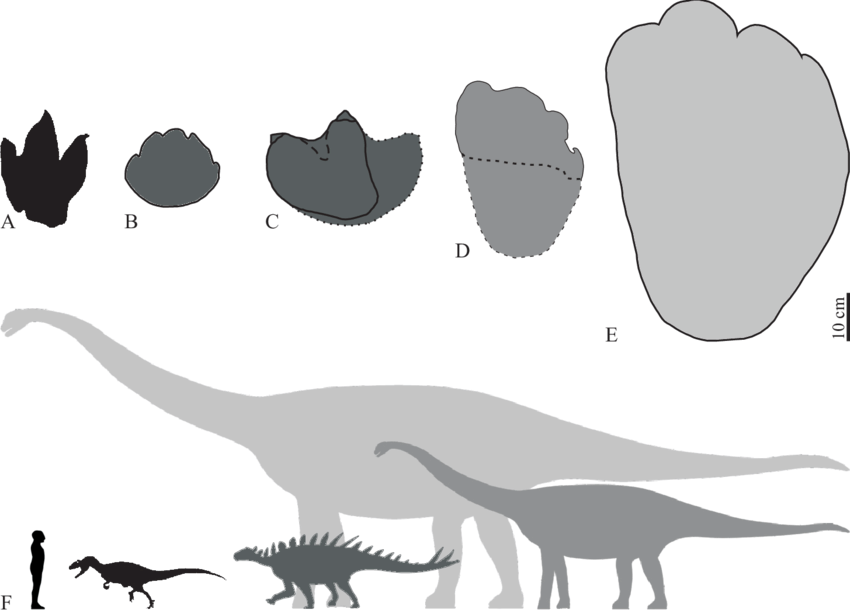
The first Dinosaur tracks in North America were discovered in the Connecticut River Valley of Massachusetts.
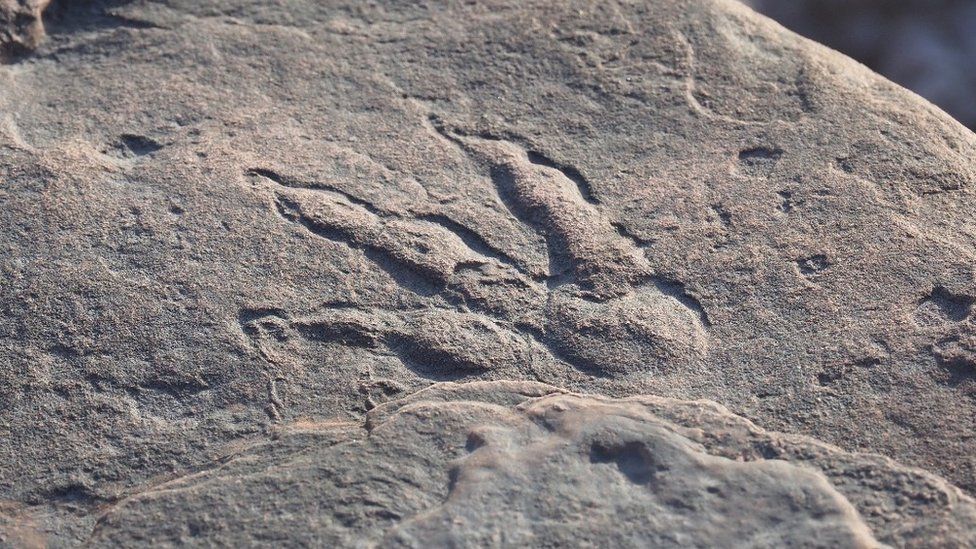
The first dinosaur tracks in recorded history were discovered by a young farm boy by the name of Pliny Moody1. At about age 12, he was plowing a field near Moody Corner, South Hadley, Massachusetts when he discovered a slab of rock with stone tracks on it. It is said that he then took the slab of tracks home and installed it as a door step at the family home. A few years later, about the time Pliny Moody went off to school, the tracks were bought by Dr. Elihu Dwight of South Hadley, Massachusetts. Dr. Elihu Dwight2 was the first person in recorded history to purchase a dinosaur track. While in the possession of these two men, they obtained the name “the tracks of Noah’s raven” because the biblical Noah, when he was on the ark, released a raven that never returned. It was believed that the raven landed in South Hadley, Massachusetts and left it’s tracks in the mud which later turned to stone. After obtaining the tracks, Dr. Dwight had the tracks in his possession for about 30 years. About 1839 they where obtained by Professor Edward Hitchcock for Amherst College. The slab of tracks is known as 16/2 in the Amherst College collection.
However, the first dinosaur tracks in North America, that came to the attention of scientists, were noticed in Greenfield, Massachusetts in 1835. They were quarried by Dexter Marsh3 at his stone quarry near Turners Falls, Massachusetts in order to be used as flag stones in the streets of Greenfield, Massachusetts . The tracks were noticed by several Greenfield residents before coming to the attention of a Greenfield physician by the name of Dr. James Deane4. Dr. Deane is credited as the first person to recognize the scientific significance of the tracks and he began to study them. He also contacted Professor Edward Hitchcock of Amherst College that same year to make him aware of the stone tracks. After a short delay, Professor Hitchcock came to see them and he also recognized their significance. The people who first noticed the Greenfield tracks called them “turkey tracks” because they looked a lot like the tracks of a turkey. Eventually these tracks where obtained by Professor Hitchcock for Amherst College. They are known as specimens 18/1 and 18/2 in the Amherst College collection .
As to which find is more important, I’ll leave that to better people than I to determine. To me both are important, one are the first tracks to be found and the others are the first tracks found made known to science .
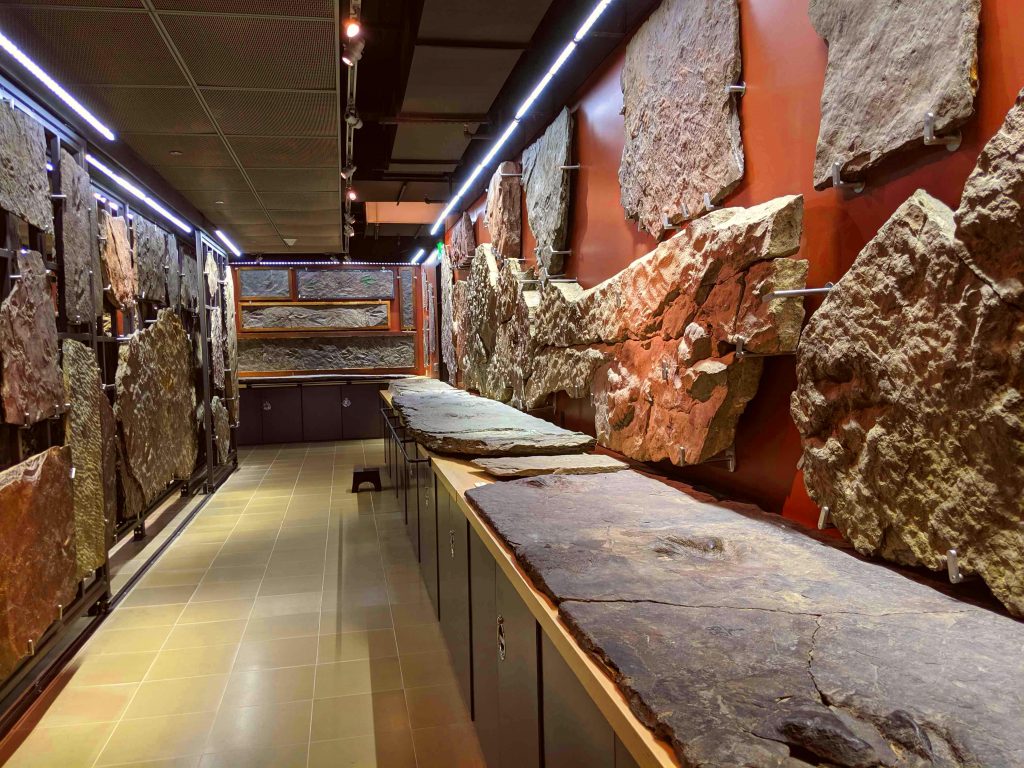
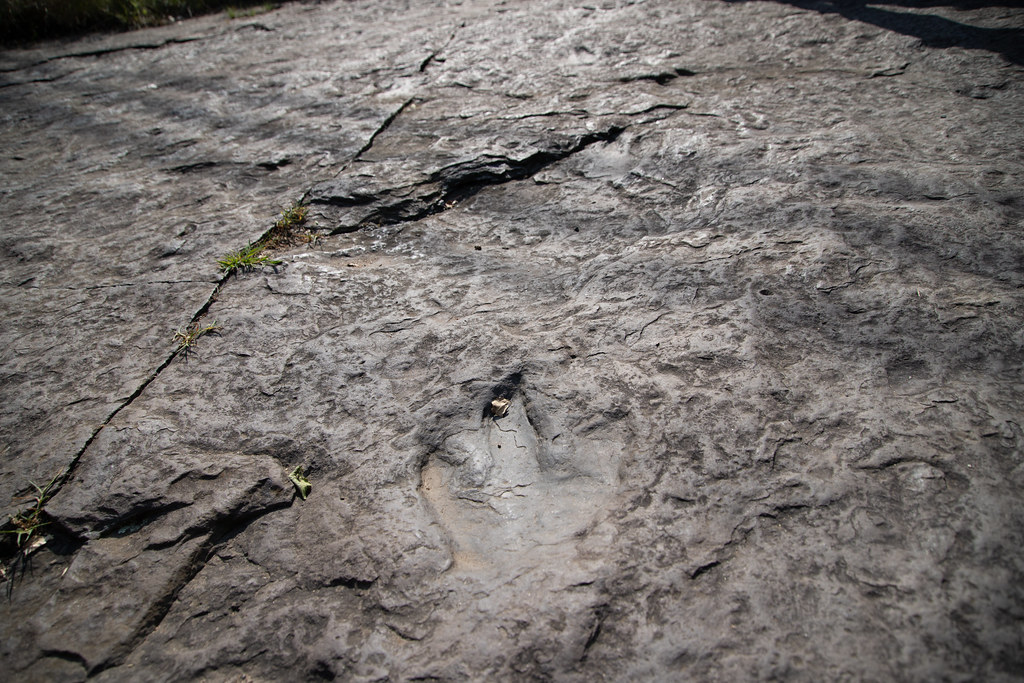
In the 1830’s both slabs of tracks came to the attention of one Professor Edward Hitchcock5 of Amherst College . After Professor Hitchcock studied them, he decided that they weren’t the tracks of “Noah’s raven” or “turkey tracks”, but rather that they were the tracks of unknown ancient birds. Anomeopus was the name eventually given to the Moody tracks . Tridentipes elegans was the name given to Marsh/Deane tracks. These early footprint finds sparked an interest on the part of Professor Hitchcock to study them further and thus began the field of Ichnology (the study of trace fossils such as fossil footprints). He spent the rest of his life collecting tracks from around the Connecticut River Valley. This work culminated in one of the first published works on fossil tracks: Ichnology of New England (1858 with a supplement published in 1865). It was around the time of his death in 1864, as knowledge of dinosaurs increased, that it became apparent that the Connecticut River Valley tracks were not the tracks of ancient birds, but rather the tracks of dinosaurs. They were then re-identified as dinosaur tracks.
In 1933, Carlton S. Nash made a new discovery of dinosaur tracks about one mile from the original Moody find. In 1939 he was able to buy the land and open Nash Dinosaurland. One can still see and enjoy dinosaur tracks at that site today.
- Pliny Moody (discovered the first dinosaur tracks in recorded history) was born December 18th, 1790 to Ebenezer and Lois Moody . He grew up in a house near Moody Corner, South Hadley, Massachusetts. He was the son of a farmer.
After discovering the first tracks, Pliny Moody went on to attend and receive his A.B. from Middlebury College in Middlebury, Vermont in 1814. He married Eliza Pomeroy of Southampton, Massachusetts on September 19th, 1819. They had two children that lived to adulthood : (Plinius b.1822 – who graduated from Amherst College in 1845, Andover Theological Seminary in 1848, became a lienced pastor, and died in 1858 at age 36) and (Eliza b.1823 – who married Elisha Bridgeman, moved to Belchertown, Massachusetts, and died 1847 at age 23).
Pliny Moody is listed in the 1860 South Hadley town census as a farmer . He died on June 30th, 1868 in a wagon accident and is buried in Evergreen Cemetery in South Hadley, Massachusetts. His gravestone, also listing his ancestors, is still there. A picture of his gravestone is shown on this page.
- Dr. Elihu Dwight (first person in history to purchase a dinosaur track)
“Elihu Dwight was born on October 22, 1763 in Belchertown, Massachusetts to Justus Dwight and Sarah Lamb Dwight. After graduating from Dartmouth College in 1790, he studied medicine with Dr. Ebenezer Hunt in Northampton, Massachusetts. Dwight became one of the first physicians to establish a medical practice in South Hadley, Massachusetts. On October 7, 1801, he married Lydia White of Springfield, Massachusetts. They had four daughters and four sons together. He became a successful businessperson and acquired a good deal of property in the local area. He also made a substantial donation towards the establishment of the Mount Holyoke Female Seminary. At ninety, he died in his South Hadley home on June 1, 1854.”
-The biographical note accompanying the papers of Dr. Dwight at Mount Holyoke College. - Dexter Marsh (first prolific collector of the stone tracks) was born August 22, 1806 to Joshua and Mindwell Marsh in Montague, Massachusetts . He grew up in a family of humble means and did not have the opportunity for much of a formal education . However, it is said that he had a good intellect and a good Christian character. He spent most of his life as a day labor doing a variety of different jobs .
He is the man who is credited with being the person who dug up the first dinosaur tracks made known to science . He was hired by one Mr. Wilson to dig up flag stone from a quarry in Turners Falls, Massachusetts . He was installing them in the streets of Greenfield, Massachusetts when several people noticed stone tracks in the flag stones . They were quickly named “turkey tracks” by the people who saw them.
Dexter Marsh spent many hours during the rest of his life collecting tracks up and down the Connecticut River, especially in the Greenfield area . It is said that at the time of Dexter Marsh’s death in 1853 that he had the best collection of tracks and related fossils in the world . The collection contained over 500 slabs of tracks and 200 fossil fish, but could not be held together. So it was sold off in pieces by the family for a sum of around $3,000. That was a tidy sum of money in that day .
Dexter Marsh died April 2, 1853 and is buried in the Green River Cemetery in Greenfield, Massachusetts.
- Dr. James Deane (first to recognize the scientific significance of the stone tracks) was born February 24, 1801 to Christopher and Prudence Deane of Colerain, Massachusetts. He grew up on a farm and worked on the farm until he was 19.
He attended local schools including Deerfield Academy for a brief period of time . He then pursued several different things for a career including being a lawyer . He eventually decided to pursue medicine and went to the medical school at the University of the State of New York graduating in 1831 with an MD . He then returned home to the Greenfield, Massachusetts area to establish a medical practice, which he practiced the rest of his life.
His interest in the “stone bird tracks” was a side interest that he pursued for the rest of his life after first seeing them in 1835 . He eventually wrote a book entitled Ichnographs from the Sandstone of the Connecticut River Valley that was published in 1861 a few years after his death.
Dr. James Deane died June 8, 1858 and is buried in the Green River Cemetery in Greenfield, Massachusetts.
- Professor Edward Hitchcock (invented the field of ichnology and the first to study the stone tracks extensively and the related geology of the Connecticut River Valley ) was born May 24, 1793 in Deerfield, Massachusetts to parents of humble means. He graduated from Deerfield Academy in Deerfield, Massachusetts, but never attended college. It was during these early years that he developed an interest in natural history and science . In 1816 he became the principle of Deerfield Acadamy and while there had a Christian spiritual awakening. He then became a Congregational minister and served for awhile at a church in Conway, Massachusetts. This interest in the spiritual and the natural world lead to a life long interest in reconciling the natural world with the biblical account of creation in the Genesis.
After serving for a time as a pastor, he was offered a teaching position at Amherst College in 1825 . He spent the rest of his life associated with that institution . From 1825 until 1845 he taught Natural History and Chemistry. In 1845 he became the third president of Amherst College and the Natural Theology and Geology professor . He served as president until 1854 bring the college back from the brink of bankruptcy . He continued to serve as the Natural History professor until his death.
Professor Edward Hitchcock died February 27, 1864 and is buried in the West Cemetery in Amherst, Massachusetts.
One of the significant events in his life occurred in 1835 when he saw a slab of stone containing what looked like “stone bird tracks”. This sparked one of the great interests of his life, the study of Ichnology ( the study of fossil footprints ). He always thought them to be the tracks of an ancient bird . It wasn’t until about the time his death that they were definitively re-identified as dinosaur tracks.
He is especially known for four early scientific writings.
- Ichnology of New England (1858 with a supplement 1865) – This was the first publication on the study of fossil trackways. Professor Hitchcock identified them as ancient bird tracks, but they were later re-identified as dinosaur tracks.
- The Religion of Geology and it’s Connected Sciences (1851) – This was an early attempt to reconcile the natural world with the biblical account of creation in Genesis.
- Report on the Geology of Massachusetts (1833-1841) – Professor Hitchcock was hired by the state of Massachusetts to do the first Geological survey of the state of Massachusetts . It was published in four volumes and several editions.
- Elementary Geology (1840 and many revised editions) – This was an early text book used by colleges to teach the basics of geology.
This information on this page comes from hearing many stories and reading numerous articles about dinosaurs and dinosaur tracks in the Connecticut River Valley over the years . However, I would like to acknowledge the following sources as sources of information and confirmation.
- An article in the American Journal of Science and Arts (1844), Report on Ichnolithology by Edward Hitchcock, volume 47 : pg 292-322
- Trace Fossils, Concepts, Problems, Prospects (2007) edited by William Miller III, Geology Department, Humboldt State University, Arcata, CA, USA pages 32-41
- I would also like to thank Ed Gregory of Greenfield, Massachusetts for providing information on the Greenfield/Turners Falls area tracks . Especially the transcript of the archetype by Rev. L.L. Langtroth entitled Personal Recollections of Dexter Marsh dated December 1894 and the two photos of Dexter Marsh and Dr. James Deane.